
From Inbox to Income: How a Sales VA Can Turn Missed Messages into Closed Deals

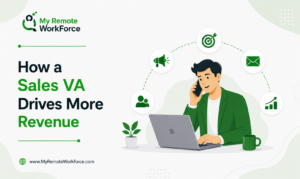
If your inbox is overflowing with inquiries and you’re staring at a backlog of DMs, emails, and follow-ups, you’re not alone. The truth is simple: missed messages and slow responses directly hit your bottom line. In many businesses, a single delayed reply can mean a lost customer. That’s where a Sales VA steps in not just as an admin helper, but as a revenue-generating asset. In this post you’ll learn how an organized, proactive Sales VA can turn inbox chaos into predictable sales.
Response time is a potent driver of outcomes. Research shows that leads contacted within five minutes are up to nine times more likely to convert than those reached after 30 minutes. That’s not just nice-to-have it’s a concrete lever you can pull to accelerate revenue. The data point about five-minute response and conversion impact is a key metric many teams use to justify faster follow-up.
Transformation promises: Inbox chaos → predictable sales.
The Hidden Cost of Delayed Responses
The clock matters at every stage of the lead lifecycle. Slow replies shrink your odds of moving a lead into a sale, and the damage compounds across channels. A slow email reply reduces open and engagement rates, leading to fewer booked calls and longer sales cycles. Social media DMs can slip through the cracks, turning promising leads into “maybe later” conversations that never close. Website inquiries and chat messages look harmless in the moment, but every minute of delay erodes the momentum you need to move leads down the funnel.
Every missed or delayed response is a revenue leakage event. The impact isn’t just in lost deals; it’s in longer time-to-revenue and higher customer acquisition costs. Lost leads from social channels accumulate quickly if there’s no one consistently monitoring and replying with value. Without a disciplined follow-up system, your pipeline may look healthy on paper but perform poorly in reality. Put plainly, when leads aren’t engaged quickly and relentlessly, you’re training your competitors to win your customers.
What a Sales VA Actually Does
A Sales VA is more than a receptionist with a nice inbox. Think of them as your revenue operations assistant with a specific toolkit designed to move people toward commitment. They quickly qualify leads, manage your CRM, and orchestrate follow-up sequences that nudge prospects toward a decision. They also prepare timely proposals, set up appointments, and keep a close eye on the pipeline to forecast and flag bottlenecks early.
Lead Qualification:
Quickly assess fit using defined criteria (budget, authority, need, timeline)
Qualified leads are funneled to your calendar or directly to you for timely follow-up
Non-qualified leads are discarded or requalified to conserve focus
CRM Management:
Maintain clean records and up-to-date contact details
Keep notes from every interaction
Segment leads by buyer persona, stage, and engagement level for targeted outreach
Follow-Up Cadences:
Balance persistence with personalization
Tailor messages around the prospect’s pain points, not just product features
Proposal Sending:
Prepare templates aligned with buyer needs
Ensure timely delivery with tracking
Appointment Setting:
Book discovery calls, product demos, or strategy sessions
Send calendar reminders and provide value-driven pre-call context to reduce no-shows
Pipeline Tracking:
Visualize stage progression and forecast results
Flag bottlenecks early to adjust tactics
A well-designed system feeds itself: qualification informs follow-ups; CRM keeps the data clean; consistent cadences convert more conversations into commitments. Key takeaway: a Sales VA aligns people, processes, and data so that every touchpoint nudges a lead closer to a decision.
The Follow-up System That Closes Deals
A proven follow-up system is the backbone of revenue growth. The goal is consistency, not clever one-off outreach. A well-executed cadence, powered by automation and disciplined human follow-through, closes more deals over time. The cadence ensures contact happens while you’re still top-of-mind, and automation tools along with CRM systems support scale so a single VA can manage dozens or hundreds of touches without losing quality. Personalization at scale matters; use each interaction to demonstrate an understanding of the prospect’s pain and your unique value.
A structured cadence for a typical service-based business might unfold like this:
Day 0:
Acknowledge receipt of the inquiry
Provide a quick next-step action
Day 1:
Share a relevant case study or insight tailored to their industry
Day 3:
Propose a few time options for a call
Day 7:
Provide an ROI-focused recap
Issue a last call-to-action
Week 2 or Beyond:
Offer a gentle nudge with new value (e.g., pricing, bundles) if there’s continued interest
Key Benefits:
Automation ensures a consistent cadence
Human touch adds personalization and persuasion
Results in predictable engagement and higher closure probability
Note on tools: Many teams rely on CRM systems and automation platforms to power these cadences. The key is to design sequences that feel thoughtful rather than robotic and to monitor performance so you can optimize over time.
Metrics That Matter
To prove ROI and continually improve, focus on a lean set of metrics. You don’t need every dashboard in the world just the numbers that show whether your follow-up system is working. Track the average time to first reply after a lead arrives, the lead-to-call ratio (the percentage of leads who agree to a call or meeting), the call-to-close ratio (the percentage of scheduled calls that convert to a sale), and the total pipeline value (the potential revenue in your active opportunities).
Mini Case Example: A small service business with 20 inbound inquiries per week implemented a dedicated Sales VA. Before onboarding, they averaged two calls booked per week and 0.8 new customers. After onboarding, response times dropped from hours to minutes, follow-up cadences were standardized, and weekly booked calls rose to eight. The close rate improved from 4% to 12%. Result: revenue potential moved from roughly $2,000 per week to about $6,000 per week, a 3x increase in weekly revenue potential with sustainable, repeatable processes. This illustrates the core principle: a disciplined follow-up system led by a capable Sales VA converts more leads into paying customers.
When is it Time to Hire a Sales VA
Five clear signs you’re ready to delegate the inbox and follow-up workload:
Inconsistent or Slow Response Time:
Leads to missed opportunities and delays in follow-up
Messy or Underutilized CRM:
Causes lost context and poor follow-up on potential deals
Struggles with Follow-Up Cadence:
Difficulty maintaining a reliable follow-up across multiple channels
More Time Spent Chasing Leads than Selling:
Spending more time tracking down leads than actually closing deals
Desire for Predictable Pipeline Velocity and Revenue Growth:
Seeking consistency in revenue rather than a string of one-off wins
Key Takeaway: If you’re seeing these signs, a Sales VA isn’t an expense — it’s a lever for revenue growth.
How to Implement:
Start with a clear service level agreement for response times, define qualification criteria, and build a concise playbook for follow-ups. Use a CRM as the single source of truth, and train the VA on your messaging and value propositions.
What to measure: Track speed to first contact, engagement quality, and conversion rate through each stage of the funnel. Use the data to tighten cadences and messaging over time.
Key takeaway: The combination of fast response, structured follow-ups, and clean data creates a scalable pipeline you can rely on.
Conclusion
The path from inbox to income is paved with speed, structure, and disciplined follow-up. A Sales VA turns missed messages into momentum, converts more leads, and provides a repeatable process that grows revenue rather than chaos.
If you’re evaluating delegation for your organization, our team at MyRemoteWorkforce can help you assess options and build a pragmatic roadmap. Explore how a virtual assistant supports outcomes like clearer strategic focus and faster execution, or get in touch to discuss your scenario.

Stay Ahead with Smarter Business Tips
Subscribe for quick reads on getting more done (without doing it all yourself), delegation wins, productivity hacks, and VA tips that actually help.