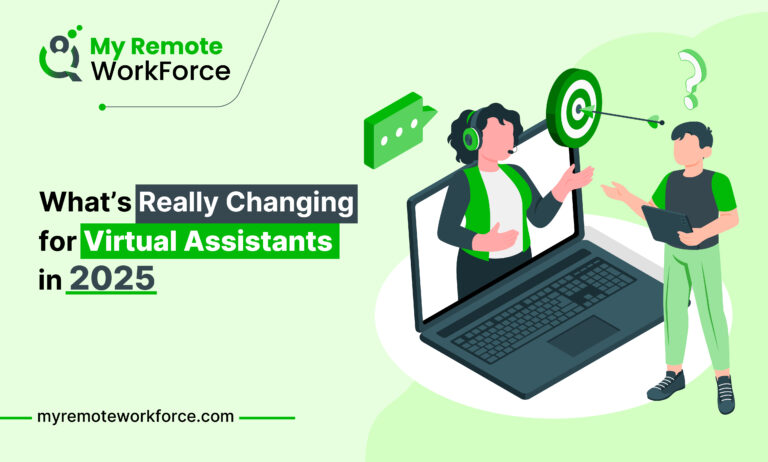
Virtual assistants have come a long way from just scheduling meetings and answering emails. These days, they’re doing way more—and by the looks of it, 2025 is only going to push things further.
Here’s a quick rundown of what’s happening in the VA world and what’s likely to shape the future of this space.
1. AI Tools Are a Big Help, Not a Replacement
Everyone’s talking about AI—no surprise there. But rather than taking over jobs, these tools are actually helping VAs work faster and smarter.
Many are using AI to sort tasks, respond to messages, draft social media content, or even flag priority emails. It’s not about replacing the human brain, though. It’s just about having one more tool in the toolbox.
2. VAs Are Getting More Specialized
There’s less demand for “do-it-all” assistants these days. More businesses want someone who already knows the ropes of their industry.
So if a company runs an online store, they’re probably looking for a VA who’s worked with Shopify or WooCommerce. Same with real estate, law, healthcare—you name it. Knowing the lingo and tools really helps.
3. Set Hours? Not So Much
The typical 9-to-5 doesn’t apply to most VAs anymore. Many now work across time zones, using apps like Slack, Trello, or Asana to stay in sync. Some barely hop on video calls at all—they just update their clients and keep things moving.
It’s all about flexibility. If the work gets done, nobody really minds when it gets done.
4. Security Is Becoming a Big Deal
Since VAs deal with a lot of private info—passwords, files, emails—businesses are starting to pay more attention to how secure things are.
Some VAs are learning the basics of cybersecurity or getting familiar with privacy rules like GDPR. Even just using a password manager or VPN helps build trust with clients.
5. Agencies Are Getting Popular
Instead of hiring one VA, more businesses are signing up with agencies that offer a whole team. These setups often come with a flat monthly fee and include different services like admin help, design, or even social media support.
It’s easier for the client, and for the VAs, it means steady work without always hunting for new gigs.
6. Soft Skills Still Matter Most
AI can do a lot—but it still can’t read tone, understand stress, or handle tough conversations. That’s where emotionally smart VAs really shine.
Being calm under pressure, knowing how to respond to an upset client, or just showing empathy in a quick Slack message—that stuff still matters a lot.
Final Thoughts
The role of a virtual assistant is no longer just administrative, it’s strategic. The most effective VAs are flexible, tech-savvy, and capable of growing alongside the businesses they support. And for startups and small teams, working with a VA who understands their pace and priorities can make a measurable difference in productivity, focus, and growth.
At iQuasar, we help startups find and work with virtual assistants who go beyond task execution. Our VAs are trained, adaptable, and ready to support your team as it scales, whether that means managing operations, automating workflows, or stepping into new tools as your needs evolve.
Want a VA who grows with your business? Connect with us today and let’s find the right fit for your team.
Subscribe for quick reads on getting more done (without doing it all yourself), delegation wins, productivity hacks, and VA tips that actually help.